
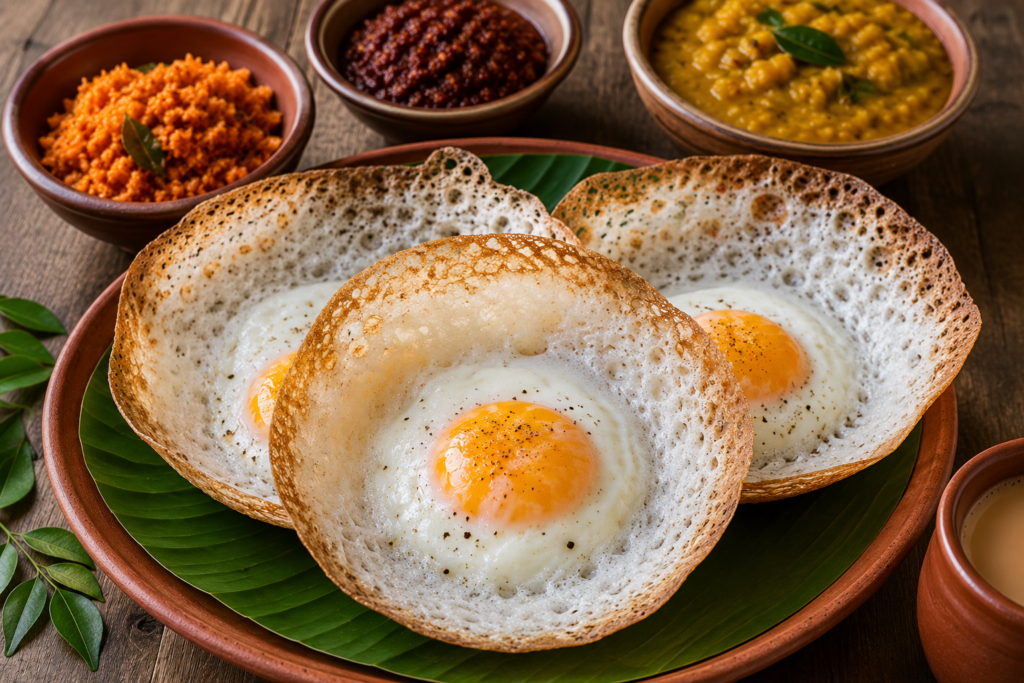
Egg Hoppers, known locally as Biththara Appa (බිත්තර ආප්ප), are one of Sri Lanka’s most iconic breakfast and dinner dishes. They are made by pouring a fermented rice flour and coconut milk batter into a small bowl-shaped pan, creating crispy edges with a soft, fluffy center. A fresh egg is then cracked into the middle and cooked until the white is set while the yolk remains soft or fully cooked, depending on preference.
Egg Hoppers are commonly served with spicy lunu miris, coconut sambol, seeni sambol, fish curry, chicken curry, or dhal curry. Their unique bowl shape and delicious combination of crispy and soft textures make them a favorite among both locals and visitors.
Preparation Time: 20 minutes (excluding fermentation)
Fermentation Time: 8–12 hours
Cooking Time: 3–4 minutes per hopper
Total Time: Approximately 9 hours
Servings: 10–12 Egg Hoppers
Ingredients
For the Hopper Batter
- 2 cups rice flour
- ½ cup cooked rice
- 1 cup thick coconut milk
- 1 cup thin coconut milk or lukewarm water
- 1 teaspoon instant yeast
- 1 teaspoon sugar
- 1 teaspoon salt
- ½ teaspoon baking soda (optional, for extra softness)
For Each Egg Hopper
- 1 fresh egg
- A few drops of coconut oil (optional)
To Serve
- Lunu Miris
- Pol Sambol
- Seeni Sambol
- Dhal Curry
- Fish Curry
- Chicken Curry
Step-by-Step Instructions
Step 1 – Prepare the Batter
In a blender, combine:
- Rice flour
- Cooked rice
- Thick coconut milk
- Thin coconut milk
- Sugar
- Instant yeast
Blend until the batter becomes smooth.
Step 2 – Ferment the Batter
Transfer the batter to a large bowl.
Cover and let it ferment for 8–12 hours or overnight in a warm place until slightly bubbly and airy.
Step 3 – Season the Batter
After fermentation, stir in:
- Salt
- Baking soda (optional)
Mix gently.
The batter should have a pourable consistency, similar to pancake batter. Add a little water if it becomes too thick.
Step 4 – Heat the Hopper Pan
Place a traditional hopper pan (appa chatti) over medium heat.
Lightly grease it with coconut oil if necessary.
Allow the pan to become hot before adding the batter.
Step 5 – Form the Hopper
Pour about ¼ cup of batter into the center of the pan.
Immediately swirl the pan in a circular motion so the batter coats the sides thinly while leaving a thicker center.
Step 6 – Add the Egg
Carefully crack one fresh egg into the center of the hopper.
Avoid breaking the yolk unless desired.
Step 7 – Cover and Cook
Cover the pan with a lid.
Cook over medium heat for 3–4 minutes until:
- The edges are crispy and golden.
- The hopper is fully cooked.
- The egg white is set.
- The yolk reaches your preferred level of doneness.
Step 8 – Remove and Serve
Carefully loosen the edges using a spatula.
Lift the Egg Hopper gently from the pan.
Serve immediately while hot.
Additional Details
Cooking Tips
- Allow enough time for proper fermentation to achieve soft, fluffy hoppers.
- The hopper pan should be hot before pouring the batter.
- Swirl the batter quickly for thin, crispy edges.
- Use fresh eggs for the best flavor and appearance.
- Cover the pan while cooking to ensure the egg cooks evenly.
Best Side Dishes
Egg Hoppers pair perfectly with:
- Lunu Miris (Spicy Onion Sambol)
- Pol Sambol (Coconut Sambol)
- Seeni Sambol (Caramelized Onion Relish)
- Dhal Curry (Parippu)
- Chicken Curry
- Fish Curry
- Coconut Milk with Jaggery
- Sri Lankan Potato Curry
Variations
- Cheese Egg Hopper – Sprinkle grated cheese over the egg before covering.
- Spicy Egg Hopper – Add chopped green chilies and black pepper to the egg.
- Vegetable Egg Hopper – Top with onions, tomatoes, and curry leaves.
- Masala Egg Hopper – Add a spoonful of spicy onion masala before cracking the egg.
Storage
- Hopper batter can be refrigerated for up to 2 days after fermentation.
- Stir well before use.
- Cooked Egg Hoppers are best enjoyed immediately and are not recommended for storage, as they lose their crisp texture.