
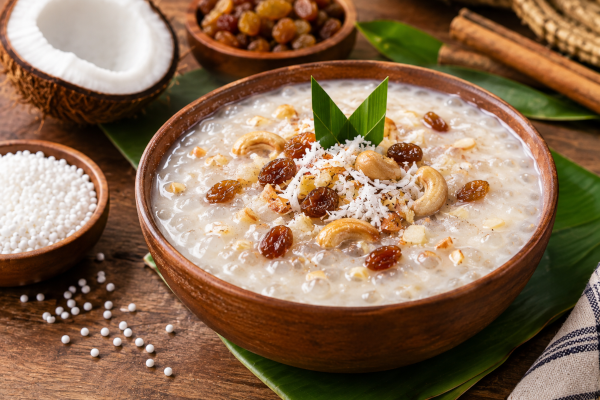
What is Sago?
Sago is a traditional Sri Lankan sweet dish made with sago pearls, coconut milk, sugar or jaggery, and aromatic spices. The small translucent sago pearls become soft and slightly chewy when cooked, creating a creamy and comforting dessert.
Sago is commonly prepared as a sweet porridge or dessert and is enjoyed as a snack, especially during festive occasions and family gatherings. It can be served warm or chilled and is particularly delicious with the rich flavor of coconut milk.
Preparation Time: 10 minutes
Soaking Time: 20–30 minutes
Cooking Time: 20 minutes
Total Time: Approximately 50 minutes
Servings: 4–6
Ingredients
Main Ingredients
- 1 cup sago pearls
- 4 cups water
- 1 cup thick coconut milk
- ½ cup sugar or grated jaggery
- ½ teaspoon cardamom powder
- 1 small cinnamon stick
- 1 pinch of salt
Optional Ingredients
- 2 tablespoons raisins
- 2 tablespoons cashew nuts, chopped
- 1 tablespoon grated coconut
- 2 cloves
- ½ teaspoon vanilla essence
Step-by-Step Instructions
Step 1 – Wash the Sago
Place the sago pearls in a bowl and rinse them thoroughly with clean water.
Drain the water.
If the sago pearls are large or firm, soak them in water for 20–30 minutes. Drain well before cooking.
Small sago pearls may not require soaking, depending on the package instructions.
Step 2 – Boil the Water
Pour 4 cups of water into a large saucepan.
Add the cinnamon stick and bring the water to a boil.
Step 3 – Cook the Sago
Add the washed sago pearls to the boiling water.
Reduce the heat to medium-low.
Cook while stirring occasionally to prevent the pearls from sticking to the bottom of the pan.
Continue cooking until the sago becomes soft and mostly translucent.
This usually takes around 10–15 minutes.
Step 4 – Add the Sweetener
Add the sugar or grated jaggery.
Stir well until completely dissolved.
If using jaggery, strain the melted jaggery beforehand to remove any impurities.
Step 5 – Add the Coconut Milk
Reduce the heat to low.
Slowly add the thick coconut milk while stirring gently.
Do not allow the coconut milk to boil vigorously, as it can separate.
Step 6 – Add the Spices
Add:
- Cardamom powder
- A pinch of salt
- Cloves, if using
Mix gently and cook for another 3–5 minutes over low heat.
Step 7 – Add Optional Ingredients
If desired, add:
- Raisins
- Chopped cashew nuts
- Grated coconut
Stir gently and cook for another minute.
Step 8 – Check the Consistency
The finished Sago should have a creamy, slightly thick consistency, with soft translucent pearls distributed throughout.
If it becomes too thick, add a little warm water or coconut milk.
Step 9 – Serve
Remove the cinnamon stick and cloves.
Serve the Sago warm in small bowls.
It can also be chilled in the refrigerator and served as a cold dessert.
Additional Details
Tips for Making Perfect Sago
- Avoid overcooking the sago, as the pearls can become excessively soft and sticky.
- Stir occasionally while cooking to prevent the sago from sticking to the bottom.
- Use fresh coconut milk for a richer traditional flavor.
- Add coconut milk over low heat to prevent it from separating.
- Adjust the amount of sugar or jaggery according to your preference.
- The Sago thickens as it cools, so keep the mixture slightly thinner while cooking.
How to Tell When Sago is Cooked
Properly cooked sago pearls should appear mostly translucent with little or no white center.
If the pearls still have a noticeable white center, continue cooking for a few more minutes.
Serving Suggestions
Sago can be served:
- Warm as a sweet porridge
- Chilled as a dessert
- With roasted cashews
- With raisins
- With grated coconut
- With a drizzle of kithul treacle
- As part of a Sri Lankan festive meal
Popular Variations
Coconut Milk Sago
The traditional creamy version made with thick coconut milk.
Jaggery Sago
Uses grated jaggery instead of refined sugar for a deeper caramel-like flavor.
Milk Sago
Coconut milk can be partially or completely replaced with dairy milk for a creamier variation.
Cardamom Sago
Uses extra cardamom to create a stronger aromatic flavor.
Cashew and Raisin Sago
Includes roasted cashews and raisins for additional texture and sweetness.