
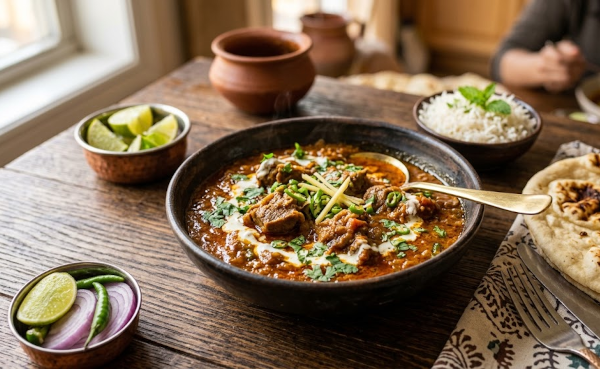
About Mutton Boti Curry
Mutton Boti Curry is a rich and aromatic curry made with tender pieces of mutton cooked slowly with onions, garlic, ginger, tomatoes, coconut milk, and a blend of fragrant spices. The slow cooking allows the meat to absorb the spices and develop a deep, delicious flavour.
This hearty curry is ideal for serving with steamed rice, biryani, roti, naan, string hoppers, or other traditional side dishes. The combination of tender mutton and a spicy, flavorful gravy makes it a satisfying meal for family gatherings and special occasions.
Note: In this recipe, “boti” refers to bite-sized pieces of mutton. If you use a specific cut such as mutton offal/tripe, the cleaning and cooking method will need to be adjusted.
3. Ingredients
For the Mutton
- 750 g mutton, cut into bite-sized pieces
- 2 tablespoons cooking oil
- 1 large onion, finely sliced
- 4 cloves garlic, finely chopped
- 1-inch piece of ginger, grated
- 2 medium tomatoes, chopped
- 2–3 green chillies, slit lengthwise
- 1 sprig curry leaves
- 1 small pandan leaf
- 1 small cinnamon stick
- 2–3 cardamom pods
- 2 cloves
- 1 teaspoon mustard seeds
- Salt to taste
Spice Mixture
- 1 teaspoon turmeric powder
- 2 teaspoons chilli powder
- 2 teaspoons roasted curry powder
- 1 teaspoon coriander powder
- ½ teaspoon cumin powder
- ½ teaspoon black pepper
- ½ teaspoon fennel powder
- ½ teaspoon garam masala, optional
For the Curry Gravy
- 1½ cups thin coconut milk
- ½ cup thick coconut milk
- 1 tablespoon tamarind juice or lime juice
- ½ teaspoon sugar, optional
- Additional salt to taste
Optional Ingredients
- 1–2 dried red chillies
- 1 tablespoon tomato paste
- 2 tablespoons chopped coriander leaves
- ½ teaspoon fenugreek seeds
- 1 teaspoon roasted black pepper, freshly ground
4. Step-by-Step Method to Cook Mutton Boti Curry
Step 1: Prepare the Mutton
Clean the mutton pieces thoroughly and drain excess water.
Cut the meat into evenly sized bite-sized pieces so that they cook at approximately the same rate.
Step 2: Marinate the Mutton
Place the mutton in a large bowl.
Add turmeric powder, chilli powder, roasted curry powder, coriander powder, cumin powder, black pepper, and a little salt.
Mix thoroughly until all the meat pieces are coated.
Cover and allow the mutton to marinate for at least 30 minutes. For deeper flavour, refrigerate it for 2–4 hours.
Step 3: Prepare the Tempering
Heat the cooking oil in a heavy-bottomed pot over medium heat.
Add mustard seeds and allow them to splutter.
Add the cinnamon, cardamom, cloves, curry leaves, and pandan leaf.
If using dried red chilli or fenugreek seeds, add them at this stage.
Step 4: Sauté the Aromatics
Add the sliced onion and green chillies.
Sauté for about 4–5 minutes, until the onion becomes soft and lightly golden.
Add the chopped garlic and grated ginger.
Cook for another 1–2 minutes until fragrant.
Step 5: Add the Tomatoes
Add the chopped tomatoes and cook for about 4–5 minutes until they become soft.
If using tomato paste, add it now and stir well.
Step 6: Add the Mutton
Add the marinated mutton pieces to the pot.
Increase the heat slightly and stir-fry the meat with the spices for about 5–7 minutes.
This helps seal the meat and develops a deeper flavour.
Step 7: Add the Thin Coconut Milk
Pour in the thin coconut milk.
Stir well and bring the curry to a gentle boil.
Reduce the heat to low, cover the pot, and allow the mutton to simmer.
Step 8: Slow Cook Until Tender
Cook the mutton for approximately 60–90 minutes, depending on the cut and tenderness of the meat.
Stir occasionally and check the liquid level.
If the curry becomes too dry before the meat is tender, add a little hot water or additional thin coconut milk.
The mutton should become tender enough to cut easily with a spoon or fork.
Step 9: Add the Thick Coconut Milk
Once the mutton is tender, add the thick coconut milk.
Stir gently and simmer for another 5–8 minutes over low heat.
Avoid vigorous boiling after adding the thick coconut milk.
Step 10: Add Tamarind or Lime
Add the tamarind juice or fresh lime juice.
Taste the curry and adjust the salt, chilli, and sourness according to your preference.
A small amount of sugar can be added to balance the flavours if the curry is particularly spicy or sour.
Step 11: Finish the Curry
Allow the curry to simmer uncovered for a few minutes until the gravy reaches your preferred consistency.
Turn off the heat and allow the curry to rest for about 5–10 minutes before serving.
Step 12: Garnish and Serve
Garnish with freshly chopped coriander leaves if desired.
Serve the Mutton Boti Curry hot with rice, roti, naan, string hoppers, or your favourite side dishes.
5. Additional Details
Tips for Tender Mutton
- Choose fresh mutton suitable for slow cooking.
- Marinating the meat helps improve its flavour.
- Slow cooking over low heat produces more tender meat.
- Avoid adding too much liquid at once.
- If the meat remains firm after the suggested cooking time, continue cooking until tender.
Pressure Cooker Method
A pressure cooker can significantly reduce the cooking time.
After sautéing the onions, spices, and mutton, add the thin coconut milk or water. Pressure cook according to your pressure cooker’s instructions until the mutton is tender.
After pressure cooking, add the thick coconut milk and simmer gently for a few minutes to finish the curry.
Sri Lankan-Style Variation
For a stronger Sri Lankan flavour, use roasted curry powder, curry leaves, pandan leaves, cinnamon, green chilli, black pepper, and coconut milk.
Adding freshly roasted and ground coriander, cumin, and fennel seeds can also give the curry a particularly aromatic flavour.
Adjusting the Spice Level
For a mild curry, reduce the chilli powder and green chillies.
For a hotter curry, add extra chilli powder, fresh green chillies, or dried red chillies.
Freshly ground black pepper can also be increased for a sharper, more aromatic heat.
Serving Suggestions
Mutton Boti Curry pairs well with:
- Steamed white rice
- Sri Lankan yellow rice
- Fried rice
- Biryani
- String hoppers
- Hoppers
- Roti
- Paratha
- Naan
- Pol sambol
- Onion sambol
- Dhal curry
- Fresh vegetable salad
For a traditional rice-and-curry meal, serve it alongside dhal, a vegetable curry, sambol, and papadum.
Storage
Allow leftover curry to cool before transferring it to an airtight container.
Store it in the refrigerator and consume within 3–4 days.
The curry can also be frozen in a suitable freezer-safe container. Thaw it safely in the refrigerator and reheat thoroughly before serving.
Frequently Asked Questions
What does “Boti” mean in Mutton Boti Curry?
The term “boti” can be used differently depending on the cuisine. It commonly refers to pieces or chunks of meat, while in some South Asian dishes it can refer specifically to certain mutton offal preparations. This recipe uses bite-sized pieces of regular mutton.
Can I use lamb instead of mutton?
Yes. Lamb can be used, although it may cook faster and have a milder flavour than mature mutton.
Can I make this curry without coconut milk?
Yes. Replace the coconut milk with water or additional stock for a non-coconut version. However, coconut milk provides a creamy texture and is particularly suitable for a Sri Lankan-style curry.
Why is my mutton still tough?
Mutton can require considerable cooking time. Continue simmering gently until the meat becomes tender. Cooking time varies depending on the age of the animal and the particular cut.
Can I prepare Mutton Boti Curry ahead of time?
Yes. Preparing the curry several hours or a day before serving can allow the spices to develop further. Reheat gently before serving.