
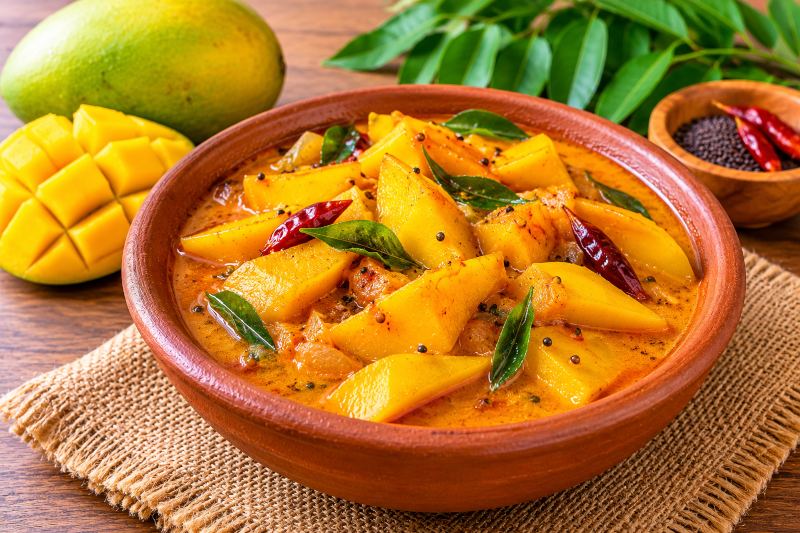
About Mango Curry
Sri Lankan Mango Curry is a delicious traditional-style curry that combines the natural sweetness of ripe mangoes with the spicy and aromatic flavours of Sri Lankan cuisine. Prepared with coconut milk, curry leaves, mustard seeds, cinnamon, and chilli, this curry offers a wonderful balance of sweet, sour, spicy, and creamy flavours.
Mango curry is a popular choice for a traditional rice and curry meal. It can be prepared with slightly ripe or firm mangoes and is perfect for lunch, dinner, family gatherings, and special occasions.
Mango Curry Ingredients
Main Ingredients
-
3 medium-sized mangoes, peeled and cut into large pieces
-
1 cup thick coconut milk
-
1 cup thin coconut milk
-
1 medium onion, sliced
-
2–3 green chillies, slit lengthwise
-
3 cloves garlic, finely chopped
-
1-inch piece of ginger, grated
-
1 sprig curry leaves
-
1 small pandan leaf
-
1 small cinnamon stick
-
½ teaspoon mustard seeds
-
½ teaspoon fenugreek seeds
-
½ teaspoon turmeric powder
-
1 teaspoon chilli powder
-
1 teaspoon roasted curry powder
-
½ teaspoon black pepper
-
1 tablespoon cooking oil
-
Salt to taste
Optional Ingredients
-
1 tablespoon sugar or kithul treacle
-
1 teaspoon tamarind juice
-
2 dried red chillies
-
¼ teaspoon cumin powder
-
A pinch of chilli flakes
Step-by-Step Method to Cook Mango Curry
Step 1: Prepare the Mangoes
Wash the mangoes thoroughly and peel them.
Cut each mango into medium-sized pieces. If the mangoes are small, you can cut them into halves or quarters.
Choose mangoes that are ripe but still firm enough to hold their shape during cooking.
Step 2: Prepare the Tempering
Heat the cooking oil in a medium-sized saucepan over medium heat.
Add the mustard seeds and allow them to splutter.
Add the fenugreek seeds, cinnamon stick, dried red chillies (if using), curry leaves, and pandan leaf.
Stir gently until fragrant.
Step 3: Sauté the Aromatics
Add the sliced onion and green chillies.
Sauté for about 3–4 minutes until the onions become soft.
Add the chopped garlic and grated ginger. Cook for another minute until fragrant.
Step 4: Add the Spices
Add the turmeric powder, chilli powder, roasted curry powder, black pepper, and cumin powder if using.
Stir well and cook for approximately 30 seconds.
Avoid burning the spices.
Step 5: Add the Mangoes
Add the prepared mango pieces to the saucepan.
Gently mix until the mangoes are coated with the onion and spice mixture.
Cook for about 2–3 minutes to allow the flavours to combine.
Step 6: Add Thin Coconut Milk
Pour in the thin coconut milk.
Add salt to taste and stir gently.
Cover the saucepan and cook over low to medium heat for approximately 8–12 minutes, depending on the firmness and ripeness of the mangoes.
The mangoes should become tender without completely breaking apart.
Step 7: Add Thick Coconut Milk
Reduce the heat and pour in the thick coconut milk.
Stir gently and simmer for another 3–5 minutes.
Avoid boiling the curry vigorously after adding thick coconut milk, as it may separate.
Step 8: Adjust the Flavour
Taste the curry and adjust the seasoning.
-
Add sugar or kithul treacle if the mangoes are sour.
-
Add tamarind juice if you prefer a tangier flavour.
-
Add extra chilli powder if you prefer a spicier curry.
-
Add a little warm water or coconut milk if the gravy is too thick.
Step 9: Finish and Serve
Turn off the heat once the mangoes are tender and the gravy reaches your preferred consistency.
Allow the curry to rest for about 5 minutes so the flavours can develop.
Serve warm with steamed rice or your favourite Sri Lankan dishes.
Additional Details
Tips for Making Perfect Mango Curry
-
Use firm, slightly ripe mangoes to prevent them from becoming mushy.
-
Choose mangoes with a good balance of sweetness and sourness.
-
Do not stir the mangoes too vigorously during cooking.
-
Adjust sugar and chilli according to the natural sweetness of the mangoes.
-
Add thick coconut milk towards the end for a creamy texture.
-
Avoid overcooking the mangoes so that the pieces retain their shape.
Sri Lankan-Style Mango Curry Variation
For a more traditional Sri Lankan flavour, use roasted curry powder, curry leaves, pandan leaves, fenugreek, cinnamon, and coconut milk.
You can also prepare a sweeter version using ripe mangoes and a little kithul treacle. For a spicier version, increase the chilli powder and add freshly chopped green chillies.
Choosing the Best Mangoes
Different mango varieties can be used for this recipe.
-
Karthakolomban: Sweet and aromatic, suitable for a mild curry.
-
Willard: Offers a pleasant balance of sweetness and sourness.
-
Tommy Atkins: Firm flesh that holds its shape during cooking.
-
Slightly unripe mangoes: Ideal for a tangier and more sour curry.
The taste will vary depending on the mango variety and ripeness.
Serving Suggestions
Sri Lankan Mango Curry pairs wonderfully with:
-
Steamed white rice
-
Sri Lankan yellow rice
-
Coconut rice
-
String hoppers
-
Roti
-
Paratha
-
Dhal curry
-
Tempered cashew curry
-
Fried fish
-
Chicken curry
-
Pol sambol
-
Papadum
It is particularly delicious as part of a traditional Sri Lankan rice and curry spread.
Vegan and Vegetarian Recipe
This Mango Curry is naturally vegetarian and vegan when prepared with vegetable or coconut oil and plant-based ingredients. Coconut milk provides the creamy texture without the need for dairy products.
Storage
Allow the curry to cool before transferring it to an airtight container.
Store it in the refrigerator and consume within 2–3 days.
Reheat gently over low heat. Avoid vigorous boiling, as the mango pieces may become too soft.
Frequently Asked Questions
Can I use unripe mangoes for Mango Curry?
Yes. Slightly unripe mangoes are excellent for a tangier curry. You may need to add a little extra sugar or kithul treacle to balance the sourness.
Can I make Mango Curry without coconut milk?
Yes. You can use water or vegetable stock, although coconut milk gives the curry its traditional creamy texture.
Why does my Mango Curry taste too sour?
The mangoes may be very unripe. Add a little sugar, jaggery, or kithul treacle to balance the sour flavour.
Can I use canned mangoes?
Fresh mangoes are recommended for the best flavour and texture. If using canned mangoes, drain them well and reduce the cooking time.
Can I make Mango Curry spicy?
Yes. Add extra chilli powder, green chillies, black pepper, or dried red chillies according to your taste.